

Our Founding
Sport has a unique way of uniting people, igniting friendships, and changing lives. When we met in 2011, Patrick had been invited by Glenn to speak at a forum for athletes at the University of Denver. Glenn and Patrick had mutual friends. Brian showed up at the invitation of Glenn, who he’d known while working for the Avalanche and while Glenn was working with GForce Sports. Without much discussion other than hockey small talk, but with a real determination, we began a year-long process to leverage what we know about sports, and what we felt about what is right, into You Can Play.
Along the way, we’ve been able to choose our teammates and they’ve chosen us – men and women to whom we owe tremendous gratitude. Some of their efforts have been great assists, some have been jaw-dropping game changers. We thank them all.
01

Brendan Burke's Legacy
Brendan Burke was an amazing advocate, hockey player, and example for a generation of athletes. He was unfortunately taken too early by a car accident, but not before Brendan had come out to his team and the public while at Miami University and was one of the first to do so in the hockey world. You Can Play was founded with Brendan and all the other athletes in mind who struggle with their sexuality, gender identity and their sport.
02
The Founding
In 2011 discussions began between Brendan's brother Patrick Burke, and Glenn Witman and Brian Kitts. Kitts and Witman were both passionate about LGBTQ+ advocacy within sport and working to make change. Once teamed up, they founded You Can Play in early 2012 and the progress was launched!


03
The Early Years
Out of the gate, You Can Play found traction within the NHL and many professional leagues, as well as collegiate and youth programs. Early success brought an ESPY award, recognition from the UN on humanitarian efforts and several leagues signing on to make positive change within their organizations.
04
Continued Success
Our continued work focuses on the persistant need for inclusion efforts at the pro and participation level of sport. Every day we are reminded of the need for education, awareness, tools & tips, voices sharing their stories and attention on the issues that keep many kids out of sport. We will not alter our course until sport is a welcoming and safe home for all athletes, regardless of sexuality or gender identity, because if you can play, YOU can play!

Just a few of the Awards You Can Play has earned through the years:
-
GLAAD Media Awards – Outstanding Video, Sports, 2013
-
ESPN Stuart Scott ENSPIRE Award – 2015
-
1st LGBTQ sports advocacy group to address United Nations Human Rights Commission – 2015
-
National Education Association Award for Creative Leadership in Human Rights – 2016
-
International Olympic Committee Sport Beyond Borders Award – 2017
Meet the Founding Team
Many more individuals, teams, leagues and supporters deserve a place in our recognition and deep gratitude for their help in getting You Can Play off the ground.

Co-Founder
Patrick Burke
I am honored and proud to be a founding partner of the You Can Play Project. My brother Brendan taught me what the locker room can be like for young LGBT athletes, then showed me the difference one person can make by standing up for what is right. With the You Can Play Project, we hope to provide a means for athletes, coaches, and fans to stand up and create an atmosphere of inclusion. As each person or team stands up, LGBT athletes everywhere will become aware that they can be themselves without fear. Freed from the burdens of fear and shame, these athletes will be free to play to their full potential, making our teams, our leagues, and the sports themselves better, stronger, and more entertaining.
It’s time to change the way the world thinks about athletes – both straight and gay. Talent, work ethic, and character are all that matters when evaluating a player. It’s time for straight allies to show their character by enabling LGBT athletes to show their talents without fear. If you can play, You Can Play.
Co-Founder
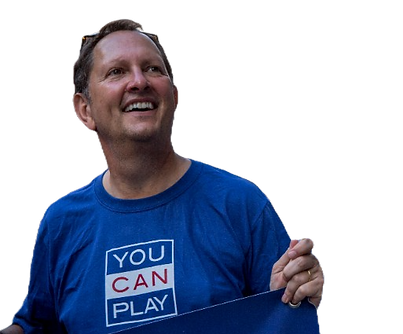
Brian Kitts
Anyone who’s played a sport knows the feeling of stepping up to make the big play – that split second slapshot or a soccer ball lofted across a field.
For Glenn, Patrick and me, You Can Play is that big play. Fairly randomly, buddies meet and realize they like the same sports. It’s usually as simple as that. But, we realized that our love of sports had a tougher side, and one that we want to change. You Can Play is a project that lets straight athletes and straight allies talk to each other about gay athletes. This is a project that lets gay athletes tell their stories and talk about what makes them great.
It turns out that most of us have a gay little brother or sister, or uncle, cousin, teammate or best friend. We all laugh and snicker at gay jokes and we call each other names. We’re just kidding, kind of, and it’s funny, right? We might not mean anything by it, but the subtle pressure, casual homophobia, and true lack of understanding are keeping our brothers and sisters, uncles, cousins, teammates and best friends from being great athletes.
I was the little chubby kid who played soccer and I heard a lot about it. Kids are mean. But, while you might not be the fat kid anymore, you don’t grow out of who you are. Eventually, I went to work as a marketing guy for professional teams: hockey, basketball, lacrosse and soccer. The sports change, but the slurs don’t. Adults are mean, too. There are some terrific and embracing people in the world of sports. But there’s a continuing lack of awareness that, unless we aggressively work to change a culture, it stays the same.
I’m a competition junkie. I’ll watch anything if someone is going to win – from hockey and lacrosse to curling and yachting. And, I know more about bull riding than I do about most sports. Casual homophobia doesn’t help an athlete in any of these sports win and it’s time for it to stop. It’s time for us to talk about it. My work with the You Can Play Project will focus on what teams and their fans can do to shift the focus locker rooms and stands from who an athlete loves, to whether the player can help his or her team win. That means building awareness in fans that, if your fellow fans will call you out for using a racial slur during a game, I’ll call you out for using the f-word. It means building awareness in teams that getting cheap laughs by focusing the Kiss Cam on the opposing team’s bench, sends a message that unnecessarily mocks some of your paying customers, and potentially some of your players. The fact is, we don’t know who’s in the locker room next to us, or sitting in the stands behind us. And, it doesn’t matter.
Patrick, Glenn and I aren’t the first ones to take this on, but we’re proud to join a team made of aggressive gay athletes and straight allies.

Co-Founder
Glenn Witman
I have been around sports teams my whole life and any player, gay or straight, knows the joys of being part of the team. But they also know how homophobic a locker room can be.
When Gforce Sports got started in 2006, it began as an elite gay hockey team that traveled North America playing in high caliber straight tournaments. We did this to have fun, to be together, but also we wanted to show our straight allies that gay players can be just like them.
In the past few years our advocacy, through the “Invisible Athlete” Forums and the Athlete Buddy System ( more info at www.gforcesports.org) we took a more important role at a time when GLBT youth where committing suicide at an alarming rate. And we know that coaches and teams don’t get the best performance when a member of the team is forced to keep any secret or when a player feels shut out.
You Can Play shows coaches, team captains, and players how important it is to focus on skills and work ethic, not personal differences. It is my hope that You Can Play will be the catalyst that makes locker rooms safe for all athletes rather than places of fear, slurs, and bullying. With the You Can Play team we have put together and with your help, that change has already started.
My family and friends were among the first to support You Can Play. My former high school coach spoke on our behalf and showed that relationships matter even after all these years. I thank them, and you, for your support.